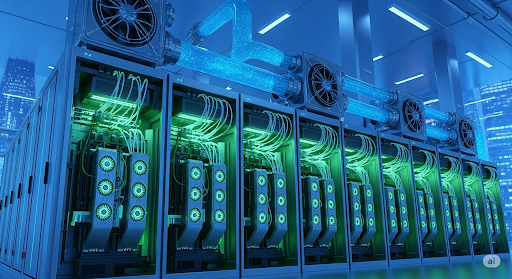
The rise of artificial intelligence is fundamentally changing the way we design and build our computing infrastructure, forcing a complete overhaul of the traditional "compute backbone." We are likely to witness a monumental shift that moves beyond the traditional incremental improvements of Moore's Law and addresses the unique and massive demands of AI workloads in coming years.
Legacy data centers, which were built on commodity hardware and designed for a different era of computing, are simply not equipped to handle the requirements of modern AI. Training large language models, for example, demands an unprecedented amount of parallel processing and energy efficiency that traditional systems simply cannot provide. This has led to the need for a total architectural redesign.
A recent article on Venture Beat informs that the new compute backbone is defined by several key trends:
First is the reliance on specialized chips like GPUs and TPUs that are purpose-built for the parallel processing tasks of AI.
Second is a new focus on energy efficiency and sustainability, as AI data centers are on track to consume power equivalent to small nations. The redesign includes innovations in liquid cooling and power management to address this.
Finally, there is a push toward edge computing, which processes data closer to its source to reduce latency and bandwidth costs, enabling real-time AI applications like autonomous vehicles.
Ultimately, the author argues that this redesign is not just a technical change but a strategic necessity for any business that wants to lead in the AI-driven future.
More here