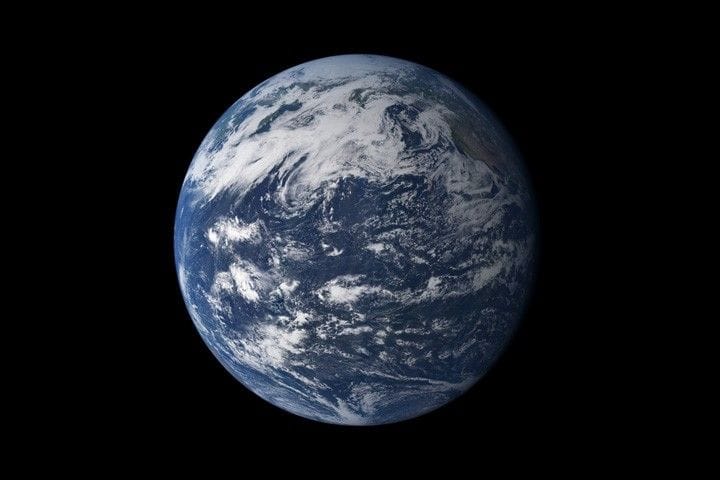
After sleeping through a hundred million centuries we have finally opened our eyes on a sumptuous planet, sparkling with color, bountiful with life. Within decades we must close our eyes again. Isn't it a noble, an enlightened way of spending our brief time in the sun, to work at understanding the universe and how we have come to wake up in it? This is how I answer when I am asked -- as I am surprisingly often -- why I bother to get up in the mornings. - Richard Dawkins


Few nature documentaries have compiled the stunning visuals and demostration of breathtaking scenery and strange creatures on our planet in a footage as cinematically adventurous as the BBC Planet Earth series (2006). Five years in production, over 2,000 days in the field, 40 cameramen filming across more than 200 locations spanning all continents and an unprecedented budget of $25 million is what brought this critcally acclaimed television feat into our homes. The 11 part hi-def nature documentary tells the epic story of life on earth in a way that has never been told before, and happens to be the sole reason why I purchased a Blue Ray player. It was difficult while I was being treated to the rare and spectacular sights that chartered on it, to not be in awe of the scope of the series. As the episodes wore on, my interest in them and the appetite to devour the succeeding ones only advanced.
There is a way that nature speaks, that land speaks. Most of the time we are simply not patient enough, quiet enough, to pay attention to the story.

The poetry in images is interwoven with a factual bona fide narrative in the series. The following two paragraphs are a summary of accounts narrated in David Attenborough's voice.
50 miles per hour winds blowing from Siberia bring snow to the dry Gobi desert in Mongolia. From a summer high of 50 degree Celsius and winter lows of minus 40 degrees, this rain shadow desert is like no other. Sometimes frost and snow, rather than sand envelope its exposed barren rocks, rendering it a unique distinguishing look. A view from space conspicuously marks the worlds greatest deserts - with dunes of sand hundreds of miles long streaking their surface. With no cloak of vegetation to conceal them, strange formations are exposed in these panoramic structures. Back on land, as the winds rise and fall, swirl and eddy, so they pile the sand into dunes. These sand seams extend out for hundreds of miles across. In another shot in Namibia elaborating the effects of the same, the winds are shown to have built some of the biggest dunes, some of them 300 meters high - and grains swept up the flanks are seen blowing off the crests of the ridges in breathtaking whirls of strong winds. It is only the tops that are moving for these mammoth dunes, while their main body may not have shifted for 5000 years. Africa's Sahara is the size of the US and the biggest source of sand and dust in the entire world. Eons down the road, rocks standing high will get inexorably chisled away as they get turned into more sand. In Egypt, lumps of such heavily eroded rocks are shown marooned in a sea of sand. Jagged pyramids 100 m tall that were once part of a continuous plateau will eventually be eliminated altogether by the blasting sand. Barring the constant presence of the desert sun, the relentless power of the wind ensures that the face of the desert is continually changing. While a third of the land on our planet is covered by deserts, they seem to be deceptively lifeless, but in fact none actually are. Life manages somehow to keep a precarious hold in all of them. Wildlife depicted here is surprisingly diverse and adaptive. Elephants shown in Namibia are the toughest and they need to be, for they walk the arid lands up to 50 miles a day searching for something to eat. With no semblance of vegetation in sight, their ordeal at times looks truly hopeless. A unique and stunning aerial voyage over the Namibian desert reveals elephants on a long trek for food, and prides of desert lions searching for scattered wandering oryx.

In contrast to the episode on Deserts described above, the chapter on Ice Worlds stood parallel and strong in majestic purview but flaunted a terrain so completely at the diagonal end of the compass, that it felt rubber stamped with esoteric images of the extreme, almost shocking disparities that co-exist on this planet. The north and south poles covered in ice are most evanescent. Nowhere else are the changes found to be so extreme, causing the ice to advance and retreat each year, and all life there is governed by that. Sweeping ariel views of giant cathedrals of ice are shown marking what would seem to be the entry points of the first polar explorers into unchartered territory. Passing the towering spires they wondered what on earth sights lay in store. Attenborough says"Nothing couldve prepared them for the ice world that loomed in view - terror incognito on land". Indeed the guise of the colossal landscape is spine-tingling, despite being shockingly provocative. Antarctica is as large as the US and 90% of the world's ice is found there. Quintessential penguins are seen hastening south over the frozen sea in order to breed. Bare rock is reckoned an oasis in a landscape buried in ice and where skittering Petrels lay their eggs when they breed in dense colonies on their cliffs and steep rocky slopes. However, even in the height of summer only nearly 3% of Antartica is free of ice. The rich Antarctic waters attract visitors from far and wide during summer and spring. Humpback whales travel over 5000 miles to reach these waters. Teams of whales spiral around each other and dive deep vertically, using a technique called bubble-netting to corral krill .They are forced north as winter approaches and the water freezes. During winter, in a matter of weeks the continent doubles in size. At the northern pole, the arctic bleak wilderness remains locked in ice most of the year. With each passing day the sun rises higher and its rays strike more directly. In spring new life stirs. Polar bear cubs emerge from the den they were born in, instinctively following their mother's lead. As the sun's influence increases the sea ice seems to take on a life of its own. Glacial melt waters pour from the land, mingling with the sea and speeding up the thaw. The seascape is in constant flux as broken ice is moved on by winds and currents. Each year as the climate warms, the ice melts more, and this is a disaster for polar bears. Their habitat is seen to be destroyed slowly and glimpses of an unstable future faced by the magnificent creature are brought to light. A dismal recording of a lonely male polar bear separated from his family shows him swimming in search for food, ducking and diving in the hope to capture seals resting on the remaining blocks of ice. Once a rare sight, polar bears are increasingly seen over 60 miles from the shore, where there can be no turning back, and they are forced to move into deeper waters. One such polar bear enters a colony of well fortified walruses and attempts to eat them, albeit the fact they are twice his size and his teeth are not meant to penetrate their blubbery flesh. When all attempt fails and after suffering injury from the walrus's tusks, the bear curls up in the ground admitting defeat, and we know he will not survive. For the audience of a movie that doesn't have the excuse of an agenda for screenplay, the realization is harrowing.
Let children walk with Nature, let them see the beautiful blendings and communions of death and life, their joyous inseparable unity, as taught in woods and meadows, plains and mountains and streams of our blessed star, and they will learn that death is stingless indeed, and as beautiful as life.[1]
Indeed, life, teeming and bustling in its dignity is presented as naturally as death from being scavenged or starved in unyielding terrains. The scenes play effortlessly and without any contradiction - from explaining the tragic and sorrow-invoking demise of a certain stock to the blessed rituals of birth and bloom of another in a different part of the planet, almost compensating for the former. Life goes on upbeat and unabated. Predators are formidable opportunists. The predator - prey engagements are an omnipresent phenomena throughout the series, and stark mementos of the complex food chains and webs that sustain the world's diverse ecosystems. The narrative and shots surrounding these sufficiently humanize the chase for one to side with the underdog - be it the markhor in the dangerous grasp of hungry amur leopards , or starving polar bears hunting down anything in sight in order to meet the needs of an appetite that hasn't been gratiated for months. The African wild dog and Arctic wolf hunts filmed from the air are a tour de force that epitomize the tragic charm of nature's disposition - what is death for one, is life for another - its the name of the game. The constant search for food governs the undercurrent of the prevailing theme for everything that is filmed in motion -from epic migrations to the adventure of strange species outside their original habitats. It competes only narrowly with the desire to breed - again a very paramount fundamental , invoking strong comparisons with mannerisms we recognize as analogous to man's own predispositions. In a certain sequence, Newbian Ibecs square up for a battle, trying to gain higher ground in a competition for mates. Fights between subordinate male ibeks proclaim winners in the hierarchy of domination, and losers may never get a chance to breed. The ensuing battleground is charged with fanatical aggression and grit, and with so much at stake, even foul play is not ruled out.
Among the peculiar behaviors which had never been filmed before, Planet Earth captured images of wild Bactrian camels eating snow in the Gobi desert as a water substitute in the parched cold lands, male birds of paradise displaying themselves to attract females in the New Guinea jungles, chimpanzees engaging in cannibalism and killing and eating one of their own and desperate lions hunting and killing an elephant at night, among several other unique footages. The active tendency of gangs of chimpanzees, to engage in violent territorial wars and organize attacks to kill within their own species stood out in contrast to the many crusades waged or endured by others predominantly outside their own kind - for food or for territory - affirming that man's closest relative is indeed a lot like himself.
I am so absorbed in the wonder of earth and the life upon it that I cannot think of heaven and angels[2] .

Planet Earth consistently brings to realization ontological belief in a nature-centric as opposed to a human-centric system of values that govern the dynamics and worth of life on our planet. In this way, it seems to unconsciously lean towards a kind of ecocentricism or biocentricism, almost antagonistic to its anthropocentric equivalent which considers humans as the center of the universe and the pinnacle of all creation. The ecocentric argument is grounded in the belief that, compared to the undoubted importance of the human part, the whole ecosphere is even more significant and consequential: more inclusive, more complex, more integrated, more creative, more beautiful, more mysterious, and older than time. The "environment" that anthropocentrism misperceives as materials designed to be used exclusively by humans, to serve the needs of humanity, is in the profoundest sense humanity's source and support: its ingenious, inventive life-giving matrix.[3] The argument becomes even more potent when focussed on how man has paradoxically been an aggressive destroyer of the natural habitats of millions of endangered species on the planet.
To elaborate on the pure experience, immersing in the series provides you with this organic perception of reality that divorces you from the fundamental process of the human-centric view of the cosmos that we so naturally ascribe to, by virtue of being. The earth and its landscapes, having survived the ravages of time and the billions of years of continuity and cosmic interconnectivity ,diminish the glory attached with this sense of human consciousness. Humanism, religion, politics and the industrial aspect of our existence seems almost to belong to a theistic and supernatural view of reality disassociated from the scientific, hard-grained, realer-than-real sense of hyper-reality juxtaposed over our speck-like stature in the universe, let alone the planet. When Betsy Dresser, vice president of a nature institute, delves into describing sampling the DNA of endangered species for future cloning and use on perhaps "a different planet" adding that "Man played God a long time ago", it makes her look farce and absurd, whereas it could otherwise serve well as an interesting topic to foray into on a scientific documentary. Similarly, when Planet Earth diaries detailing the quest for the snow leopard in the arduous Himalayan terrain in the Afghan-Pakistan border is interrupted by armies searching for Al-Qaeda, the latter, for a unique contrarian moment, outlines another goofy exhibition of the baloney of man, almost seeming like a distraction from the mainstay. Later on, as is revealed by the dialogue on conservation highlighting the adverse affect of industrialization on the environment - that nature is holistic and dynamic mesh of linkages where everything is interconnected, and that we are thoughtlessly disrupting the integrality beyond the self-correcting limits of natural processes - only exposes human folly.
To be sure, ecocentrism is not inherently an anti-human argument or a put-down of those seeking social justice. It does not deny that myriad important homocentric problems exist. Neither is it an argument that all organisms have equivalent value. But it stands aside from the smaller, short-term issues in order to consider the larger Ecological Reality. Reflecting on the ecological status of all organisms, it comprehends the Ecosphere as a Being that transcends in importance any one single species, even the self-named sapient one. In fact it even goes beyond biocentrism with its fixation on organisms, for in the ecocentric view people are inseparable from the inorganic/organic nature that encapsulates them. They are particles and waves, body and spirit, in the context of Earth's ambient energy [4]
The traveler has to knock at every alien door to come to his own, and one has to wander through all the outer worlds to reach the innermost shirine at the end [5]

Today there is an urgent need to understand the linkages and articulate the roots of issues to expand the orbit of human and global consciousness to a point from where a new social architecture becomes visible. Planet Earth — The Future: A 150-minute companion series looks at what the future may hold for endangered animals, habitats and ultimately , ourselves. It combines footage from the original series and contributions from film-makers, conservationists and some of the world's most eminent theologians and scientists who analyse the planet's environmental and conservation issues ,taking a look at what their solutions, if any, might be. Right now, conservation is going through a major re-think and re-assessment of what is the right way forward, bearing in mind the expanding human population. The most quoted success story for conservation, that of the humpback whales is introduced in a dramatic footage, followed by the familiar 'Save the Panda', 'Save the World' and 'Save the Rainforest' campaigns. However,despite the stated progress, have we really got anywhere? The program also looks back to past failures. For instance, BBC archive footage of Nairobi National Park in 1977 illustrates how local people were excluded from conservation campaigns, creating a fortress mentality. Various ways to involve common people and indigenous populations are considered, including strategies to bring income through wildlife conservation. At what point does eco-tourism cross the boundary of real benefit to the wildlife?And how can conservation fit into the ethos a world driven by economics and development?
In today’s dominating industrial culture, Earth-as-home is not a self-evident percept. Few pause daily to consider with a sense of wonder the enveloping matrix from which we came and to which, at the end, we all return. Because we are issue of the Earth, the harmonies of its lands, seas, skies and its countless beautiful organisms carry rich meanings barely understood. A trusting attachment to the Ecosphere, an aesthetic empathy with surrounding Nature, a feeling of awe for the miracle of the Living Earth and its mysterious harmonies, is humanity’s largely unrecognized heritage. Affectionately realized again, our connections with the natural world will begin to fill the gap in lives lived in the industrialized world. Important ecological purposes that civilization and urbanization have obscured will re-emerge. The goal is restoration of Earth’s diversity and beauty, with our prodigal species once again a cooperative, responsible, ethical member[6].
[1] John muir - Quotation
[2] Pearl S Buck - Roll Away the Stone
[3] Rowe, Stan J. (1994) - "Ecocentircism : the Chord that Harmonizes Humans and Earth".
[4] Rowe Stan J.- "Ecocentricism and Traditional Ecological Knowledge"
[5] Rabindranath Tagore - Gitanjili
[6] Mosquin & Rowe(2004) - "Manifesto for Earth" in journal Biodiversity