Book reviews
All the Shah’s Men by Stephen Kinzer
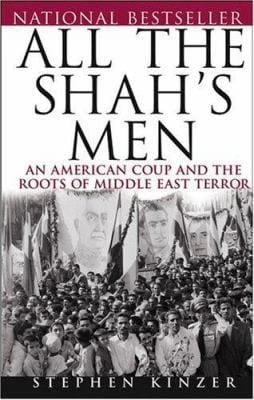
All the Shah’s Men (non-fiction) is a gripping and intriguing narration of the 1953 coup in Iran and its long shadow over modern Middle Eastern politics. Although it is narrated like a political thriller, it is grounded in historical research by the journalist cum historian Stephen Kinzer. It tells the story of how the United States and Britain carefully jointly orchestrated the overthrow of Iran’s popular and democratically elected Prime Minister, Mohammad Mossadegh, after he moved to nationalize Iran’s oil industry, previously controlled by British interests.
Kinzer argues that this covert operation—carried out by the CIA and Britain’s MI6—was a turning point that shaped modern Iranian politics, fueled anti-American sentiment, and ultimately contributed to the conditions that led to the Iranian Islamic Revolution in 1979. The view is corroborated and enhanced by various historians and academics, each offering their own take in the book's later chapters. The book portrays Mossadegh as a complex nationalist figure and informs how Cold War fears, oil politics, and imperial interests intersected to produce a decision whose consequences are still being felt today.
What makes the book especially compelling is how it connects a relatively little-understood historical event to present-day geopolitics. It helps readers understand why distrust of Western powers runs deep in Iran and why U.S.–Iran relations remain fraught. While some historians debate Kinzer’s interpretation and argue that the book simplifies certain internal Iranian dynamics, it remains one of the more readable accounts I’ve come across of a pivotal moment in modern Iranian history. It also helps in understanding the plight of this long-suffering nation that has undergone unbelievable amounts of conquest, unrest, and upheaval in the name of democracy.
Even though it reads like a spy story, the book also humanizes a tragedy—how a short-term political decision by the US to counter the threat of communism, and by Britain to retain their colonial ambitions through the Iranian Oil company, helped shape decades of ensuing conflict and mistrust. A fascinating and thought-provoking read for anyone trying to understand Iran and the roots, at least partially, of today’s Middle East tensions.
The Lion Women of Tehran by Marjan Kamali
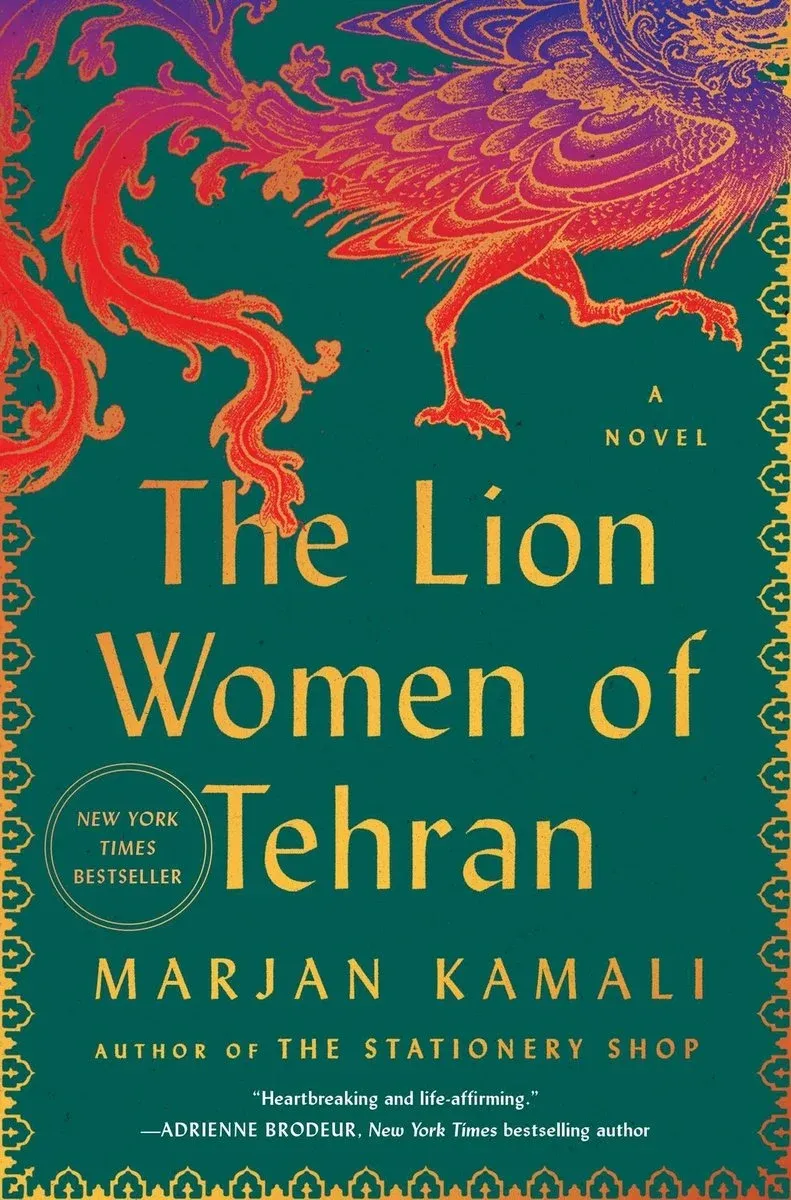
The Lion Women of Tehran by Marjan Kamali is a deeply moving and richly layered novel that blends intimate storytelling with the sweeping currents of Iranian history. At its heart, the book is about friendship—specifically the bond between two women, Ellie and Homa, whose lives diverge and reconnect against decades of political upheaval in Iran.
What makes this novel especially compelling is how seamlessly Kamali weaves historical and political context into the personal journeys of her characters. From the 1950s through the Islamic Revolution and beyond, the shifting political landscape is not just a backdrop but an active force shaping choices, relationships, and identities. The story illustrates how large-scale events—repression, protest movements, exile—filter down into the most intimate corners of life, particularly for the protagonist women navigating changing freedoms and constraints.
The emotional core of the novel lies in the contrast between Ellie’s desire for safety and Homa’s fierce idealism. Their friendship—marked by love, betrayal, guilt, and ultimately redemption—feels authentic and deeply human. Kamali resists simplifying her characters; instead, she portrays them as flawed and evolving, making their journeys all the more affecting.
I found the prose to be evocative without being too heavy, bringing to life both the sensory richness of Tehran and the emotional weight of displacement and memory. At the same time, the novel doesn’t shy away from difficult themes, including political oppression and the cost of resistance. And even though some of the topics may be considered painful, the core of the novel is uplifting and redeeming, not dark and depressing.
Ultimately, this is a novel that stayed with me, both as a personal story and as a window into modern Iranian history. It’s especially powerful in how it intertwines politics with the inner lives of its protagonists—making history feel immediate, human, and deeply felt.
21 Lessons for the 21st Century by Yuval Noah Harari
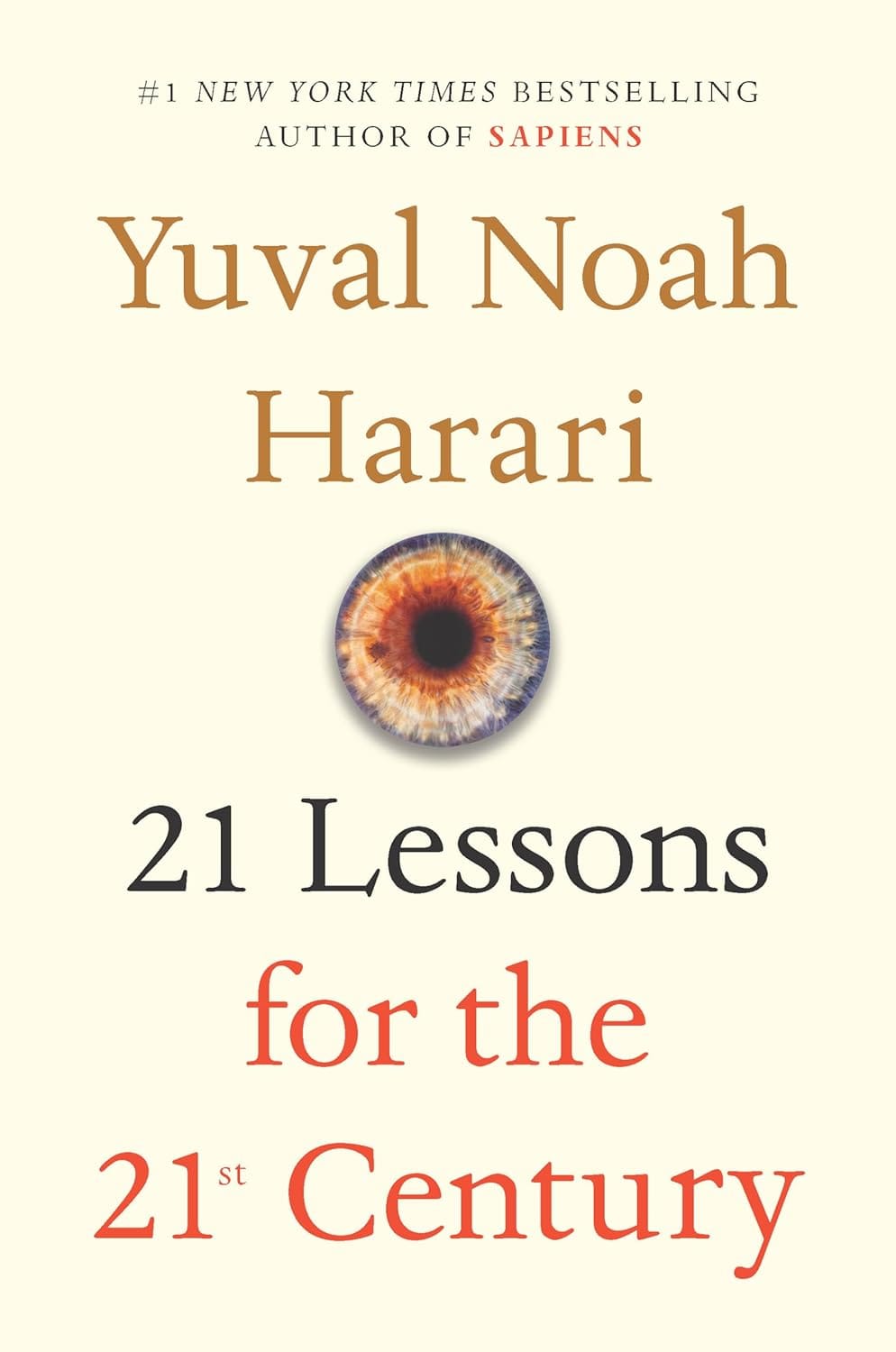
21 Lessons for the 21st Century by Yuval Noah Harari is an expansive and intellectually stimulating examination of the forces shaping our present and near future. Harari’s earlier works were more historical in scope; in contrast, this book is firmly rooted in the anxieties, uncertainties, and possibilities of the modern world—from artificial intelligence and political instability to identity, truth, and meaning.
The book is structured as a collection of 21 essays grouped loosely into themes like technological disruption, political challenges, existential risks, and personal resilience. While the essays are not tightly interconnected, this format works in its favor, allowing Harari to cover a wide breadth of topics with clarity and depth. Each chapter stands on its own, offering a lens into a specific issue, yet together they form a mosaic of what it means to live in the 21st century.
What makes the book feel especially relevant is Harari’s ability to connect abstract global trends to everyday human concerns. He explores how advances in AI and biotechnology could redefine work, agency, and even consciousness; how liberal democracies are being tested by populism and information overload; and how traditional narratives—religious, national, or cultural—are struggling to keep pace with rapid change. Rather than offering easy answers, Harari leans into the ambiguity, encouraging readers to question assumptions and stay intellectually agile in a fast-changing world.
While Hariri has been widely influential, he is also consistently criticized in academic circles for his sweeping simplifications, ‘Big History’ style (vs rigorous scholarship), and speculative claims (as opposed to evidence-based forecasting). Even so, I found his ability to synthesize vast topics into readable narratives and his focus on big and important questions intriguing and bold. The mental model one needs to work with then, is to treat his work as a thought-provoking framework as opposed to a deterministic truth; a starting point paired with a more specialized reading as you go deeper into each topic, as opposed to an end-game in itself.
At its core, the book is less about predicting the future and more about cultivating the mindset needed to navigate it. Harari emphasizes the importance of critical thinking, emotional resilience, and the ability to sift through vast amounts of often unreliable information. The tone is at once cautionary and curious—grounded in realism but open to possibility.
I found the following set of essays especially interesting, along with their themes:
- Work – He examines the looming impact of automation and AI, and the potential rise of a “useless class.”
- Liberty – The essay questions whether algorithms may come to understand and influence us better than we understand ourselves.
- Equality – It warns that data ownership could become the defining inequality of the future.
- Terrorism – Argues that terrorism’s real power lies in psychological impact rather than actual destructive capacity.
- God – Reflects on religion’s evolving role in a scientifically driven world.
- Education – Stresses the need to teach adaptability and critical thinking over rote knowledge.
- Meaning – Encourages introspection in a world where traditional sources of meaning are eroding.
- Meditation – Highlights self-awareness as a crucial tool for navigating modern complexity.
Finally, this is a compelling and wide-ranging book that feels both urgent and reflective. Its strength lies in its breadth and its willingness to engage with difficult, often unresolved questions. Even when the essays feel loosely connected, they collectively push the reader to think more deeply about the present—and more carefully about the future.
Being Mortal: Modern Medicine and What matters in the end by Atul Gawande
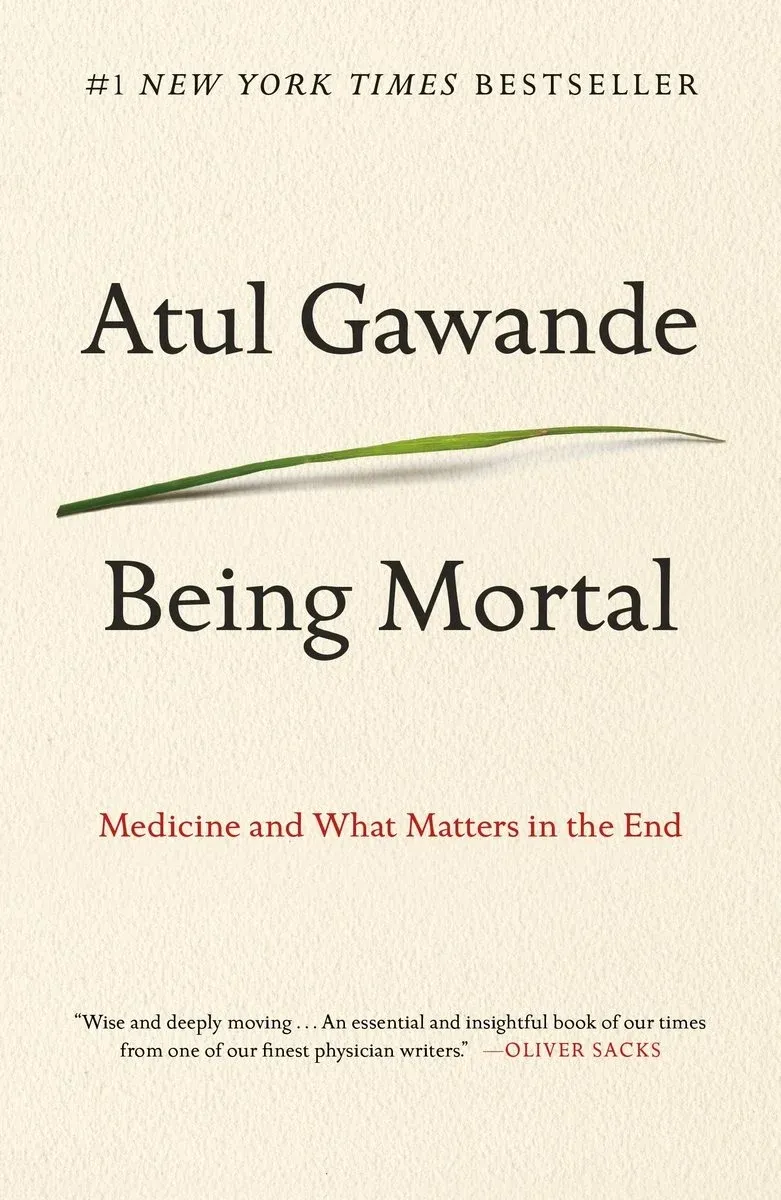
Being Mortal by Atul Gawande is a thoughtful and deeply humane exploration of aging, illness, and the inevitability of death. What makes the book powerful is not just its subject matter, but the perspective from which it is told—that of a practicing physician willing to question his own profession.
Gawande examines how modern medicine, for all its remarkable advances, often struggles when it comes to the end of life. Instead of prioritizing dignity, autonomy, and meaning, medical systems frequently default to prolonging life at all costs—even when it leads to unnecessary suffering. Through a blend of personal stories, patient experiences, and reflective analysis, he makes a compelling case for shifting the goal of care from mere survival to well-being and quality of life. Gawande writes not just as a surgeon, but as a son and observer of life’s final chapter, grappling with the same uncertainties as his patients. His honesty about the limitations of medicine—and his willingness to confront uncomfortable truths—gives the narrative both credibility and emotional weight. The book, while taking us through the historical evolution of medical systems in the West and the East, also highlights the importance of difficult but necessary conversations about what matters most at the end of life, encouraging readers to think about trade-offs, priorities, and dignity before crisis forces those decisions.
Despite pondering on a heavy subject, Being Mortal is not bleak. Instead, it is quietly illuminating, guidance-oriented, and even hopeful, suggesting that a better, more compassionate approach to mortality is possible—one that respects both the science of medicine and the humanity of those it serves. This is an insightful and reflective book and especially valuable coming from a medical practitioner who brings experience, real-life encounters, and introspection to a topic too often treated as purely clinical. A topic many of us would realistically like to avoid, but shouldn’t, especially anyone thinking about caregiving or what it means to live well until the end.