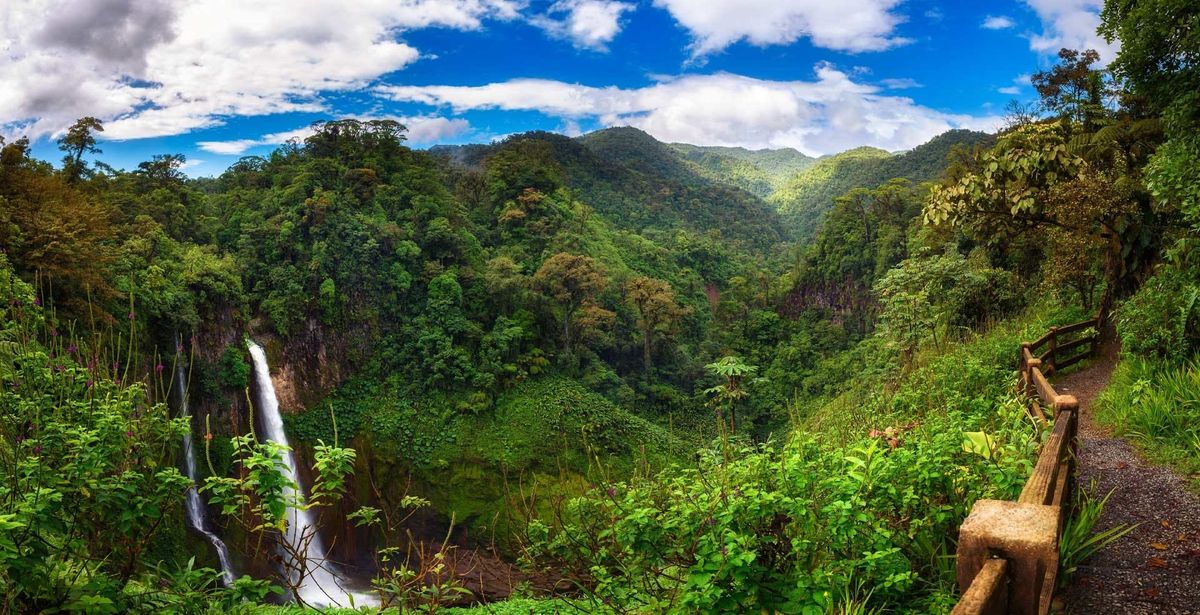
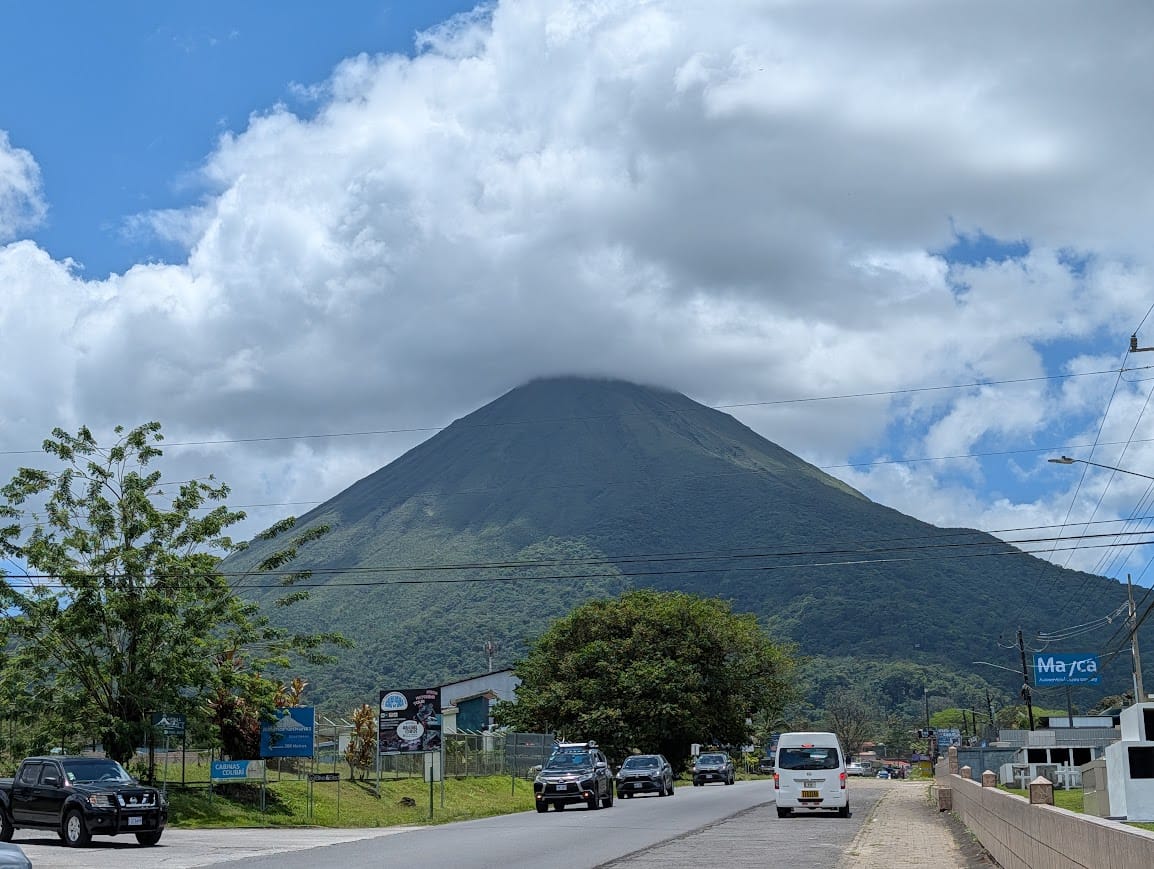
I recently returned from a trip with my family to Costa Rica, a bucket-list target on my must-visit destination list for the last decade, which I could finally check off. The majority of my time was spent in Arenal, in and around the town of La Fortuna. While back home, my 3-year-old son now points to any and every mountain in sight adorning the Bay Area with a “Look mama, volcano!”, there was much fuss to be made over the iconic Arenal Volcano in real from the moment we caught a first glimpse of it. It seemed to arise almost improbably out of the rainforest: symmetrical, brooding, alive with history. For decades, this near-perfect cone mountain shaped both the land and the lives around it, most dramatically during its eruption in 1968, and ultimately up to its protection as part of Arenal Volcano National Park. Today, it stands dormant, as of the last 10 years, but no less commanding—a reminder of nature’s power and patience. We went hiking up its flanks for hours, moving through layers of lava rock, dense foliage, teeming exotic wildlife, and sudden clearings where the volcano reveals itself in full. The air felt different there, both in the forest and atop the hills—humid, electric, full of life.
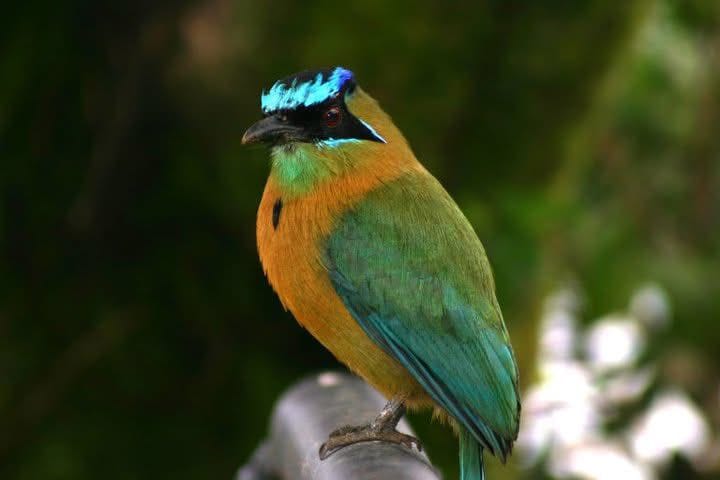
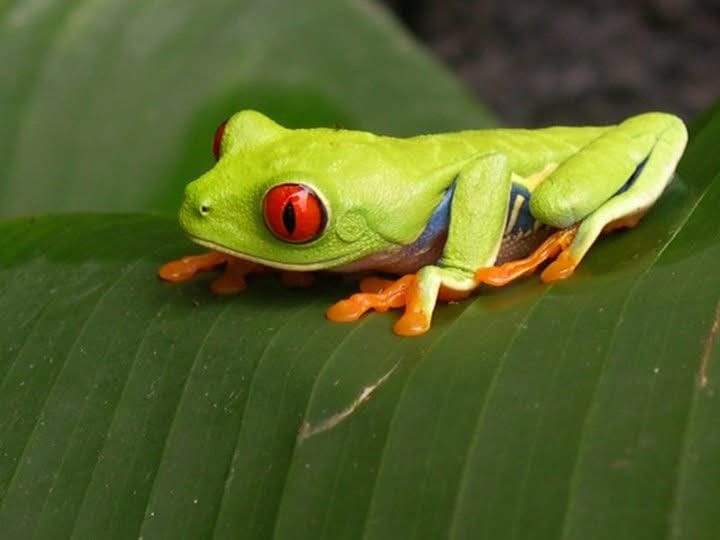
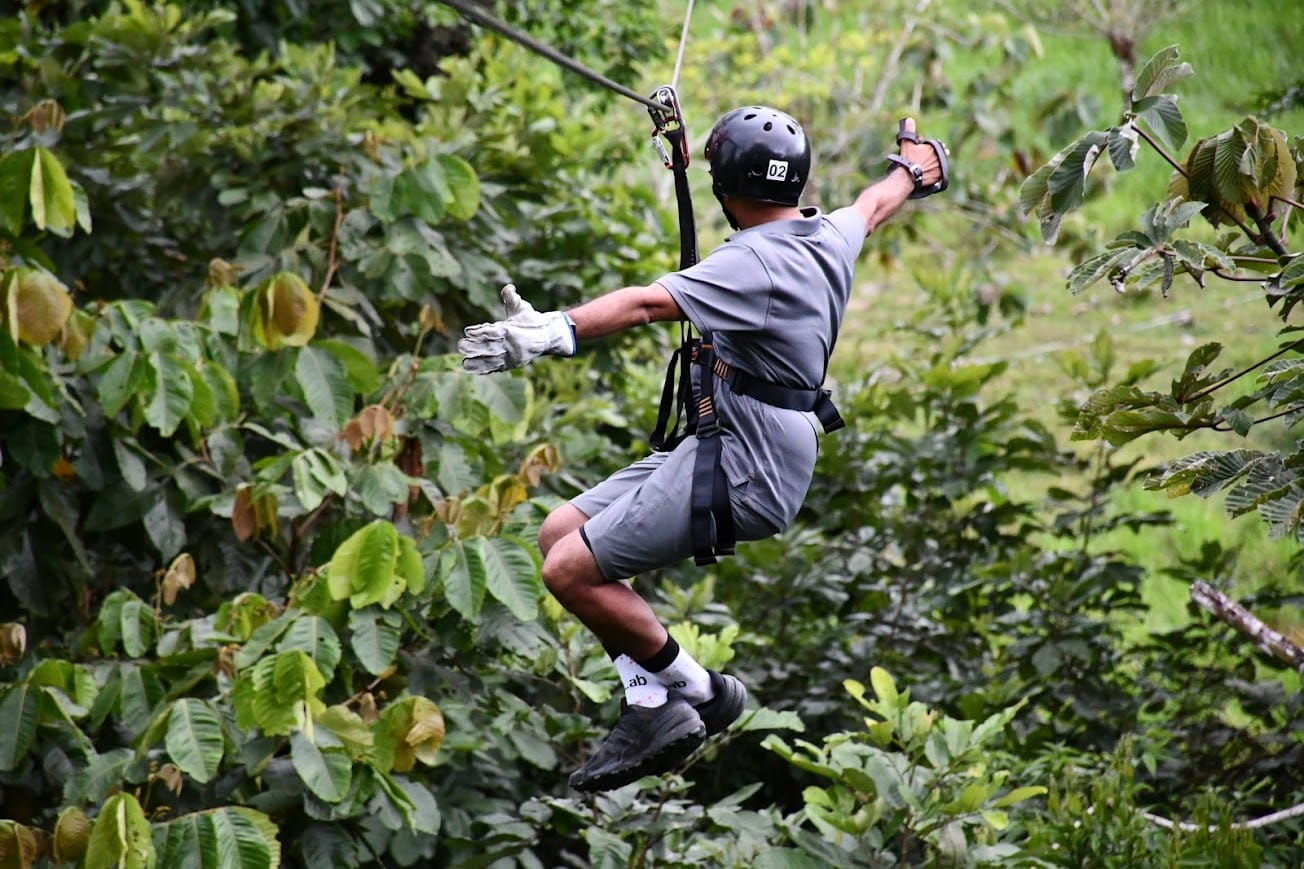
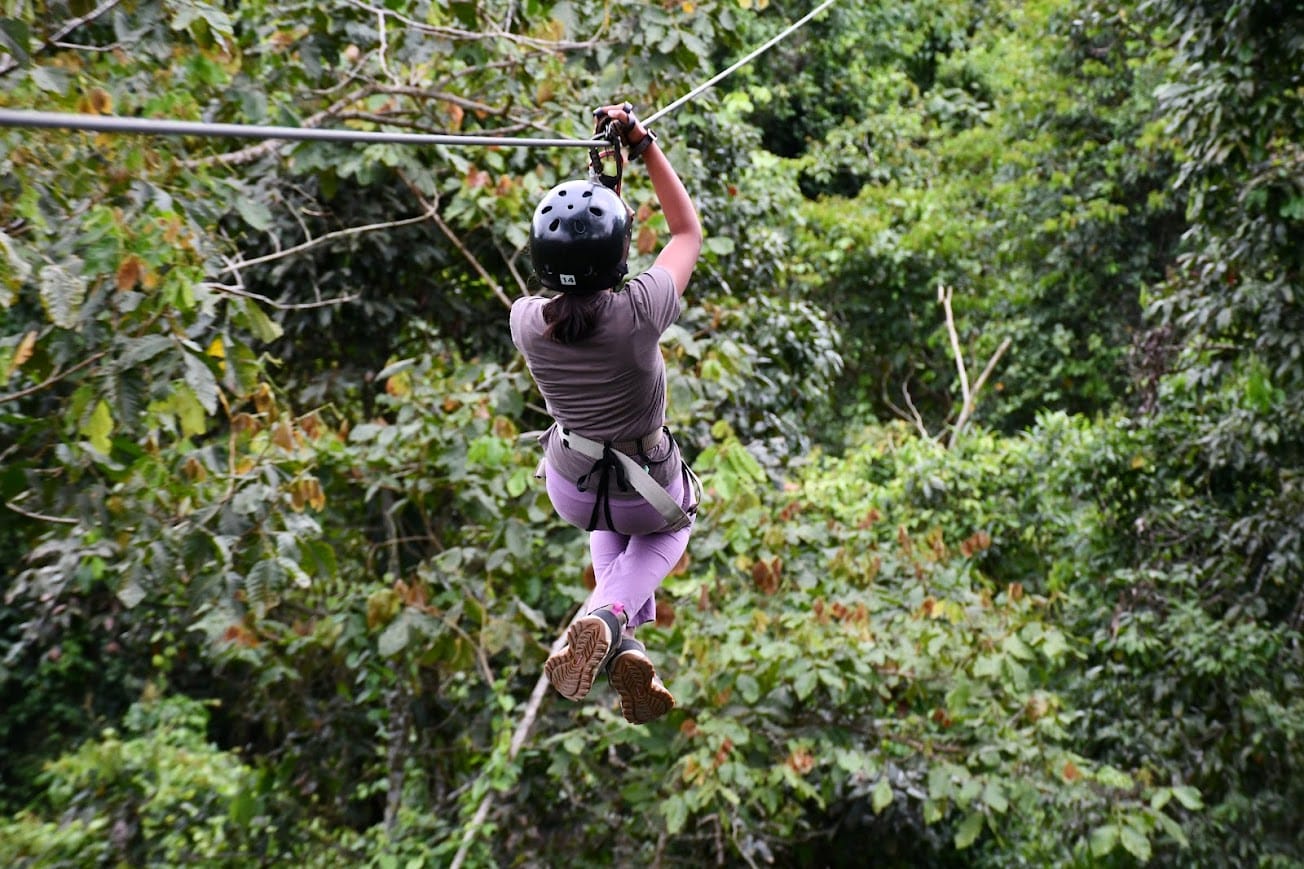
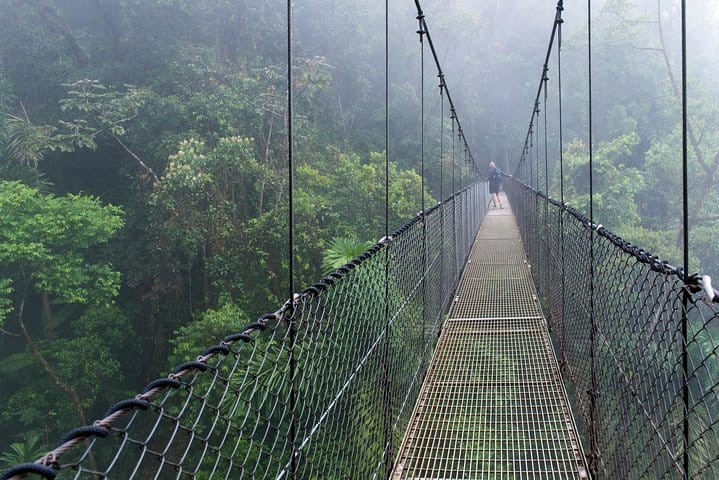
At La Foruna, which felt simultaneously both like a gateway and a refuge, our days unfolded as a series of immersive encounters with Costa Rica’s astonishing biodiversity. Ziplining through the rainforest canopy, we felt a fleeting, almost surreal experience—gliding past treetops where toucans and monkeys hopped live, unseen from the ground. The hanging bridges trail slowed things down, drawing our attention to the intricate ecosystems layered vertically through the forest—from the damp, insect-rich floor to the sunlit canopy above. Even the simplest hike became a lesson in ecological richness: every turn revealed new textures, sounds, and species.
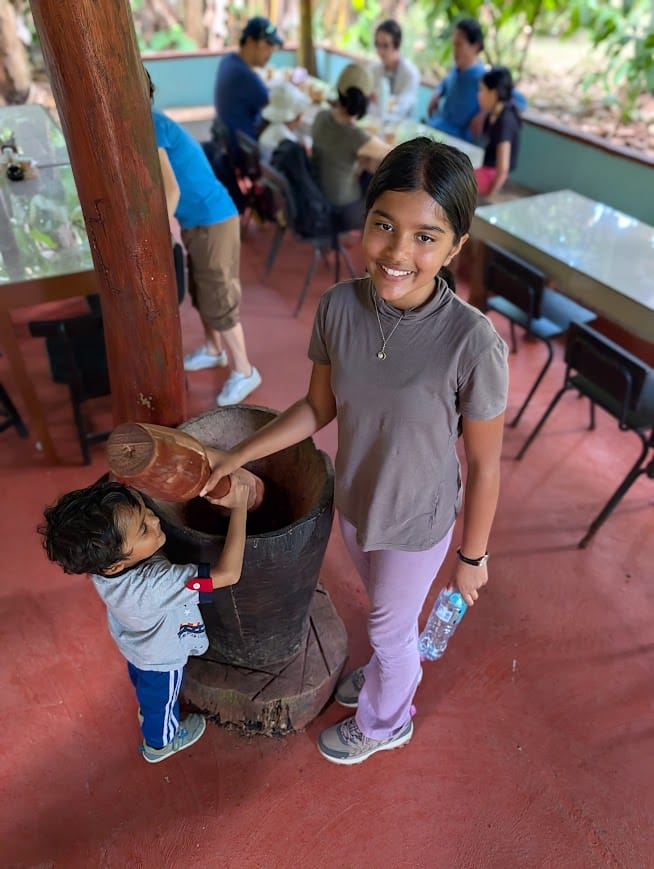
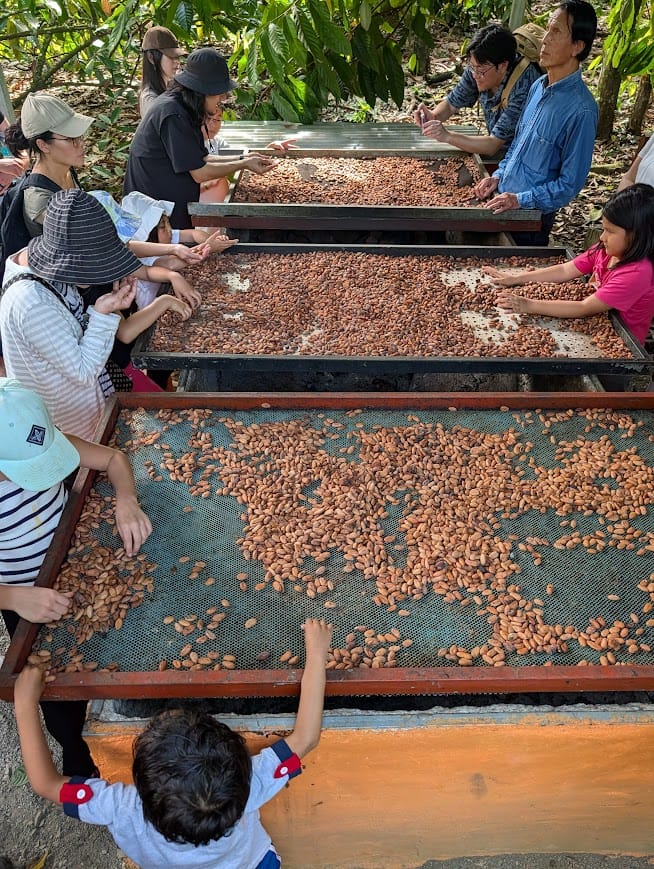
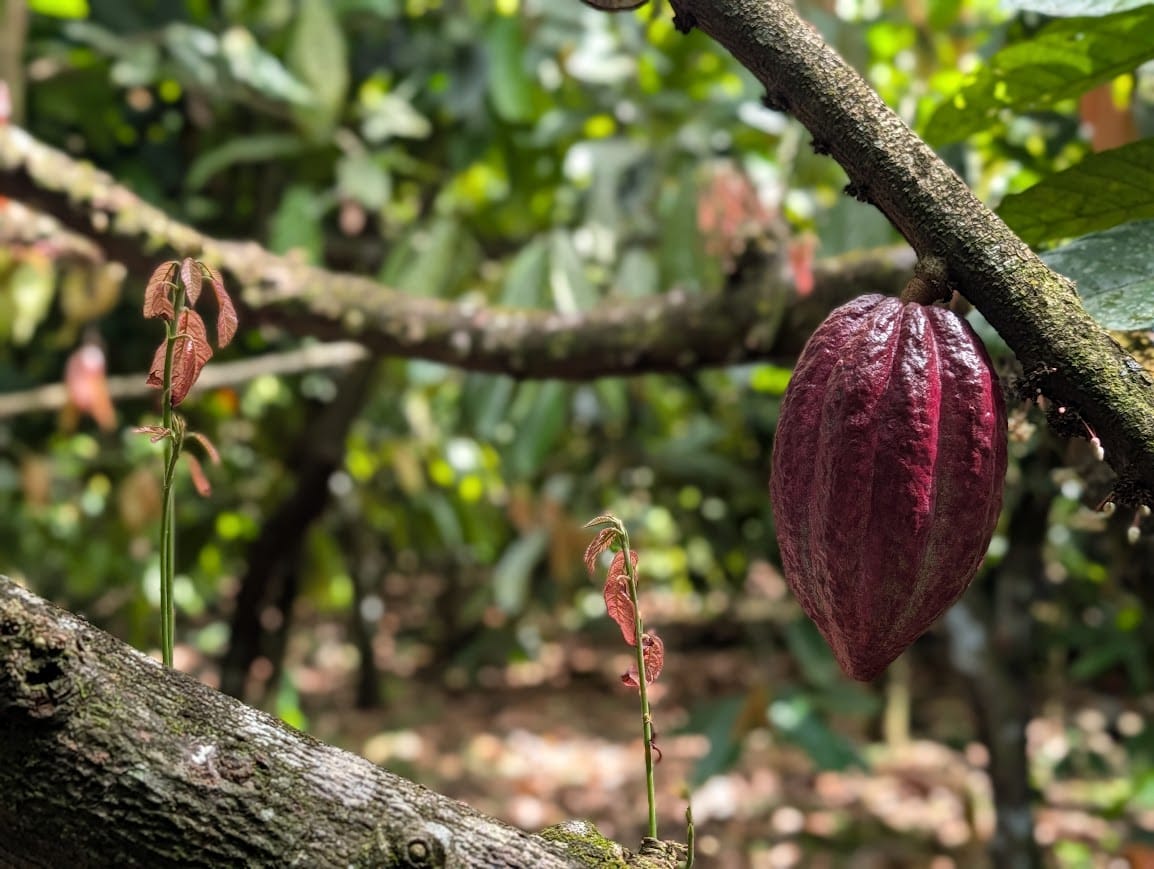
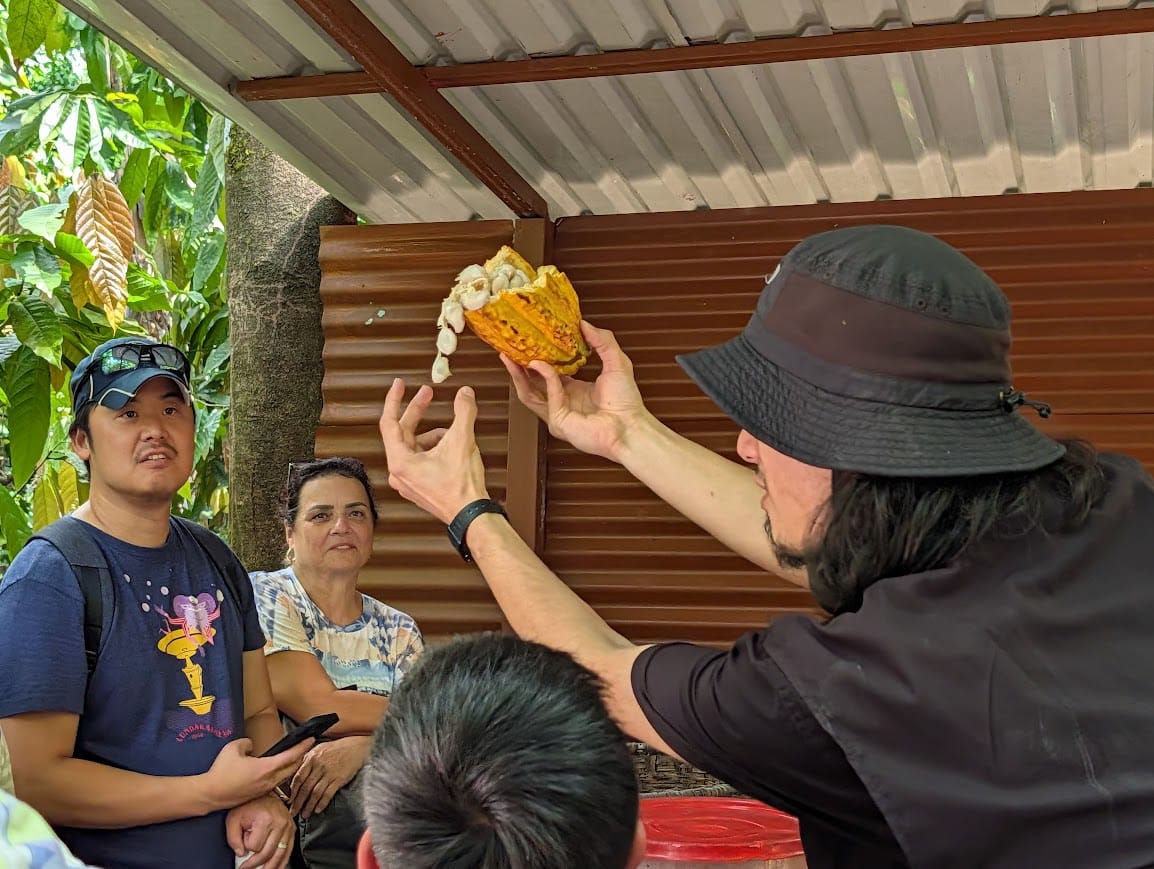
We spent a few hours at the Don Olivio Chocolate tour, navigating the native plantations - bananas, sugarcane, mango, pineapple, coffee, chocolate, and many more while learning about the production process - from cacao pods to finished chocolate, a process rooted in tradition and care, unfolding slowly. Towards the end, we were treated to chocolate and coffee tastings that were literally a farm-to-table experience in every sense. It was a reminder that Costa Rica’s richness is not just ecological but cultural—woven through small farms, local knowledge, and sustainable permaculture practices. And then there were the natural thermal springs, warmed by the very volcano that defines the region. Sitting in those mineral-rich waters, surprisingly warm and fresh, surrounded by dense greenery, felt like a mutual reconciliation between fire and forest—one nurturing the other through this calming medium.
Democracy's test
Beyond its natural beauty, Costa Rica carries a political reputation that feels just as remarkable. Often called the “Switzerland of the Americas,” it built a stable and enduring democracy through choices that set it apart: the abolition of its military in 1949, consistent investment in education and healthcare, and a long tradition of peaceful political transitions. These decisions created not just stability, but a social fabric that prioritized human development over militarization—an approach that has paid dividends for decades. Despite the lack of an army, interestingly, Costa Rica defends itself successfully through a mix of international law, diplomacy, alliances and internal security forces. The model has actually been tested (eg: attempts of conquest by Nicaragua), for disputes which were taken to International Court of Justice.
I came across this essay, which shed more light on both the successes and challenges of Costa Rica’s democratic system:
“Over the following 150 years the country would chart a peculiar trajectory in Latin America, one generally defined by its commitment to peace, democracy, the Rule of Law, human development and, later, environmental sustainability. Thus, for example, primary education became free and universal in Costa Rica in 1869, before all of Latin America, England and nearly every state in the United States. In 1940, the country introduced a public healthcare and social security system, underpinned by values of solidarity, that largely explains that Costa Ricans today enjoy a higher life expectancy than inhabitants of the United States. While not always pristine in practice, Costa Rica’s adherence to democracy, the Rule of Law, and the peaceful transfer of power was already established in the late 19th century. Its most important deviation from these principles—the short 1948 Civil War—was precisely a conflict over the sanctity of the suffrage that led to the abolition of the army. The latter decision, more than any other, codified a dramatic departure from Latin America’s political history, so often defined by the military’s overbearing presence. To this day, Costa Rica remains the longest uninterrupted democracy in the developing world. Despite being a small, peripheral country, Costa Rica became a symbol of values cherished around the world, and a test case of the proposition that a society’s healthy development depends as much on political commitments sustained over time as on sheer economic wealth.”
More here
Yet, like much of the world, Costa Rica is not untouched by change. Rising pressures from global drug trafficking networks, increasing crime, political polarization, and institutional strain are testing the resilience of its model. The same openness and strategic geography that once helped it thrive now expose it to new challenges. Its democracy remains firmly intact, but more contested; its sense of safety, once taken for granted, is evolving.
“While by most accounts the country remains a well-performing democracy, some of the defining traits of its remarkable historical journey have been visibly dented over the past three decades. A society long identified with egalitarian values and peaceful coexistence has morphed into a country that now ranks amongst the most unequal in Latin America, with criminal rates that match those of its chronically violent Central American neighbors. Perhaps most shockingly, on the back of glaring governance problems, support for democratic values and institutions has fallen significantly, and more or less continuously, since the 1980s. Partly because of its own mounting problems, and partly as a result of the normalization of democratic rule in the region, Costa Rica’s political and development trajectory has reverted to the Latin American norm.”
And still, what seems to prevail most after the journey is the balance of positive forces that dominate from over a century of evolution. Costa Rica’s story, like the ecosystem around Arenal, is one of coexistence: between past and present, stability and change, nature and human ambition. It has sustained tens of decades of progress, carving out a path distinct from much of its region, and this is no small achievement. Even as new forces reshape its trajectory, there is something reassuring in its ability to adapt, rooted firmly, like its rainforests, in resilience.