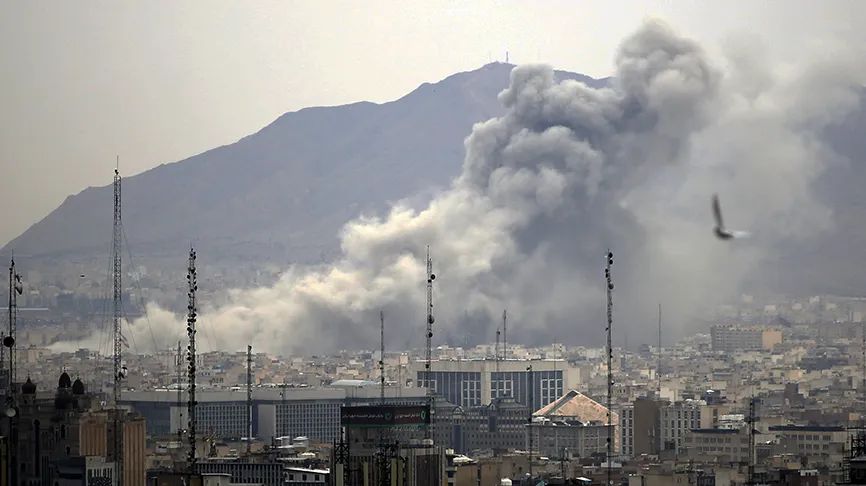
There is a certain kind of war that begins not with necessity, but with the illusion of control.
The war with Iran feels like that kind of war. Not inevitable. Not unavoidable. Not part of any grand strategy.
A war of choice.
On February 28 2026, the United States and Israel launched hundreds of strikes across Iran, targeting military infrastructure, nuclear facilities, and the Iranian regime’s leadership—killing senior figures and triggering massive retaliation across the region. Within days, missiles were flying across the Middle East, global trade routes were disrupted, oil markets were rattled, and a recoiling world was pulled into the chaos and gravity of a conflict that seems to have no clear end today.
Simone Weil, the French philosopher, who saw all war as a kind of social illness that societies fall into, said: “War is not an adventure. It is a disease.” Even so, a war of choice or conquest carries vastly different moral weight than wars conducted in direct self-defense.
Over the past decades, U.S. foreign policy—shaped by both the temptation and (oh, the burden) of being a superpower—has constructed a subconscious belief that global stability depends on American action. This self-appointed role of global policeman has long embraced the doctrine of preemption, often justified on vague and hypothetical grounds: “Iraq might develop weapons of mass destruction,” or “Iran might pose a nuclear threat.” Within this phantasmagoria of endless fear-inducing and what-if scenarios lies the justification for US-initiated preemption—action without provocation, and a blurring of the line between defense and anticipation.
Supporters of the war argue that Iran was moving closer to nuclear capability, or that it funds armed groups hostile to U.S. allies. And so the classic argument for preemptive force follows: act now so the war later is smaller.
It is also an argument that has been repeatedly hashed and invoked to justify wars that turned out to be deeply costly mistakes—think Iraq, Afghanistan, Libya.
And yet, today the question that keeps lingering is this:
What is Donald Trump’s strategy in this war?
There is a concept in foreign policy called grand strategy—the idea that military action must serve a long-term political objective rather than just a short-term tactical win. A nation’s power is meant to be deployed in a coordinated way—diplomatically, economically, and militarily—to achieve a clearly defined outcome.
When you look at the Iran war through that lens, you begin to wonder - Was the goal:
- Regime change?
- Destroying nuclear capability?
- Deterrence?
- Domestic political signaling?
- Supporting an ally?
- Demonstrating strength?
- All of the above?
When a war has multiple, shifting justifications, it usually means the real strategy was never fully formed.
And wars without a clear strategy don’t end. They only expand, mutate, and drain.
The Broken Deal That Led Us Here
To understand this war, we have to go back to the Iran nuclear deal — the JCPOA — negotiated under Obama.
It was not a perfect deal, and Iran is not a benign regime. Iran funds proxy groups, suppresses dissent, and has long pursued regional influence through various destabilizing means. These could be real concerns.
But the nuclear deal did one very important thing: it put Iran’s nuclear program inside a box with international monitoring.
When Trump tore apart the deal in 2018 and the United States withdrew from that agreement, that box of containment disappeared. From then on, the path became more predictably downhill and windy: Sanctions followed by escalation, retaliation, on to failed diplomacy, and finally today, military action.
Many analysts would now see the war as the result of years of failed diplomacy and strategic miscalculation, not a sudden, unavoidable crisis.
No Clear Endgame
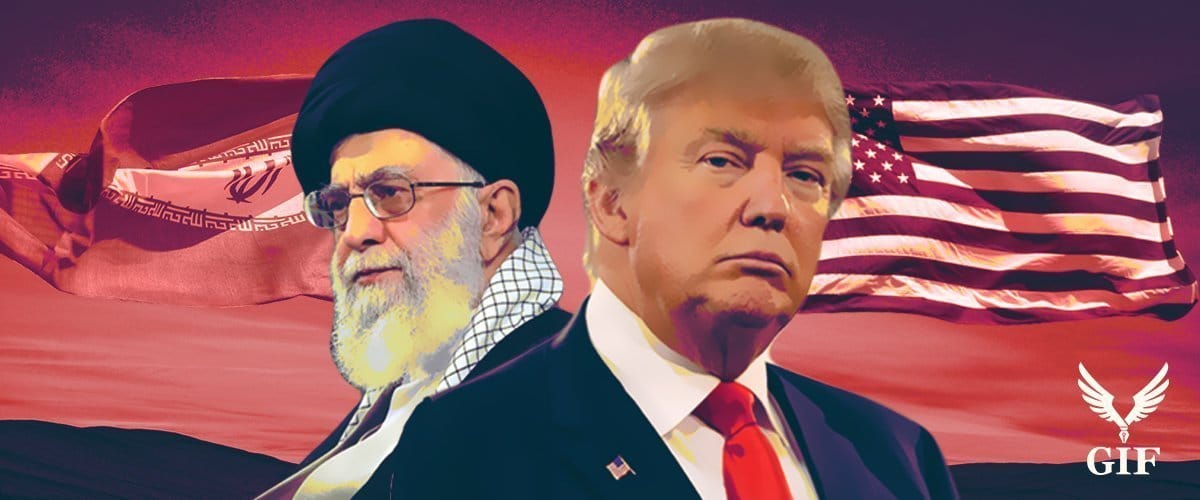
As the world mulls and watches, even more concerning than the start of this war is the absence of a clear end.
Recent reporting suggests that even the United States and Israel are divided on what the end goal actually is, exposing inconsistencies in both approach and intent. Given this, the offramp from this war grows increasingly unclear.
Israel likely sees this as a once-in-a-generation opportunity to permanently weaken Iran and reset the regional balance of power in its favor. It is unlikely to stop short of delivering a decisive blow to Iran’s regime and infrastructure. But does that translate to a new government (and who decides it?), a murder of 80% (or 100%) of the existing regime’s clerics, or something else?
The neighboring Gulf Arab states, meanwhile, find themselves in an extremely complex position. They fear Iran, but have also improved relations with it in recent years. They compete with one another for religious and regional influence, depend heavily on each other’s stability for their economic survival, and also host U.S. military bases, ironically, for their own “protection”. Privately, they may not oppose a weakened Iran—but they stand little to gain from a prolonged war. What they fear most is a full-scale regional conflict that they are unwillingly dragged into.
Their nightmare scenario—now no longer inconceivable—is stark: Iran escalates by targeting energy infrastructure, disrupts shipping routes through the Strait of Hormuz, oil exports plummet, foreign investors retreat, and their economies spiral.
For Iran, regime survival is paramount. While it likely recognizes it cannot win a full-scale conventional war, it also cannot afford to appear weak. It will continue to engage in calibrated escalation—missile strikes, proxy attacks, and harassment of shipping routes—to sustain the perception that it has stood up to the United States and Israel.
Beyond the immediate region, the geopolitical ripple effects are also in play.
Russia is likely to benefit as U.S. attention shifts away from Ukraine, and as oil prices rise, Russia—still a major energy exporter—gains economically and strategically. Its long-standing narrative that the United States is a destabilizing force gains renewed traction. In this environment, Russian intelligence, weapons, and diplomatic support become more valuable to Iran.
China may likely take this opportunity to play its long game. It benefits from access to discounted Iranian oil and the opportunity to broker bilateral deals. With the United States militarily distracted, there is less focus on China’s posture toward Taiwan and the broader Indo-Pacific region. Having previously helped broker rapprochement between Iran and Saudi Arabia, China can position itself once again as a “peace broker.” As the world gradually shifts toward a multipolar order, every prolonged U.S. entanglement creates more space for China to expand its economic and geopolitical influence. If the United States comes to be seen increasingly as a driver of conflict, China can more easily cast itself as the architect of trade and infrastructure—a long-term strategic advantage.
And yet, none of this seems to temper the behavior of Donald Trump.
Instead, we see the unleashing of his impulsive, erratic, and often incoherent demands—at times even public dismissals of the US’s own allies as “cowards.” At the same time, the United States is increasingly isolating itself: through trade wars, military escalation, and rhetoric that treats sovereign nations like puzzle pieces in a corporate acquisition strategy—“Let’s take Venezuela,” “I want Greenland,” “We can do what we want with Cuba.”
Long-standing allies are beginning to reassess the foundations of their relationship with the United States. And from the outside, America can be increasingly viewed not as a stabilizing force, but with a mix of concern and growing disdain.
Diplomacy—the slow, difficult work of building trust, forging alliances and strategic partnerships, navigating, understanding and mapping cultural differences, and negotiating durable outcomes for both sides in the modern age—requires patience, discipline, craft and strategic clarity. It is also the kind of hard work that the Trump administration appears to have little appetite for.
In its place, we are left with a presidential style that leans on hyperbole, bombast and spectacle—and the use of reactionary language reduced to a familiar loop of “beautiful” ,”wonderful”, “horrible,” and “terrible”—while the complexity of the world demands far more.
And yet, we were warned once.
Still, we chose—once again—to elect a leader who shows little regard for institutional rigor, who dismisses science when inconvenient, and whose decision-making appears deeply intertwined with personal ego.
There is little reason to believe this war will be treated any differently. Trump will never admit he made a mistake. Instead, he is more likely to risk the endless cycle of escalation —and each moment will be packaged and sold as victory: “we won,” “we crushed them,” “we obliterated them”—like quarterly earnings reports for public consumption to Trump’s loyal MAGA base, who will continue to support him devoutly no matter what havoc he wreaks.
OR
Will the American people recognize the trajectory they are on—before the damage becomes irreversible?
The Costs that come with War
“War is the greatest scourge that can afflict humanity; it destroys religion, states, families, and all civil virtues. –Immanuel Kant
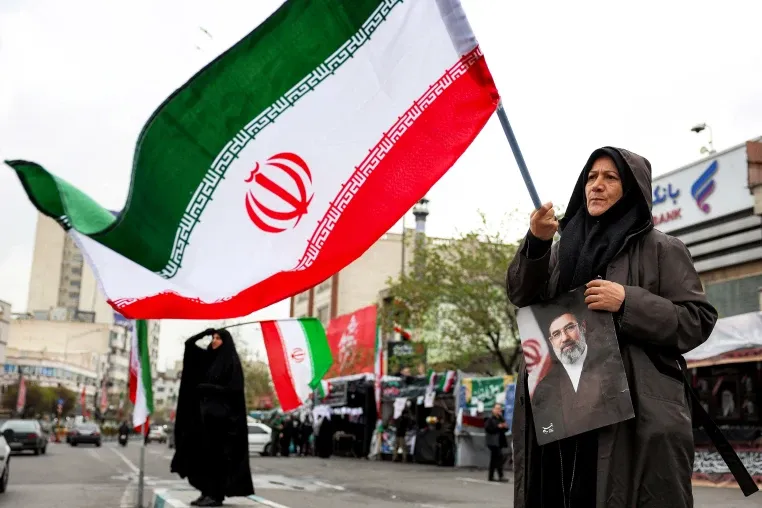
In the early days of war, the costs can feel abstract — missiles, maps, briefings, televised speeches.
But the real costs come later:
- Regional instability
- Civilian deaths
- Displacement of hundreds and thousands of people
- Retaliatory terrorism
- Global economic shocks
- Destabilized oil markets
- New enemies
- Old enemies becoming stronger
- A whole generation that grows up in the shadow of war
Strength vs. Wisdom
“Violence can destroy power; it is utterly incapable of creating it.” —Hannah Arendt
While Trump has beaten his chest all too often about how the United States has the most powerful military in the world, it is clear that this power is not being used with strategy but with impulse.
And history shows something very clearly:
Great powers rarely fall because they are weak. They fall because they overextend, miscalculate, and confuse action with strategy.
The Roman Empire did not fall in a day.
The British Empire did not collapse in a single war.
Power erodes through a thousand incorrect decisions made in moments of supposed certainty.
And the questions that he needs to be held accountable for are:
Did this war make the world more stable or less stable?
Did it make America safer or more exposed?
Did it solve a problem or create a bigger one?
Because in the end, wars are not judged by presidential speeches and salesmanship, but by what the world looks like ten years later.
And right now, it is not clear that this war is leading us toward a more stable world.
In fact, it increasingly feels like the opposite.
“War is so unjust and ugly that all who wage it must try to stifle the voice of conscience within themselves.” —Leo Tolstoy